
ERP Implementation
Fit-gap, configuration, data migration and cutover — followed by the run team that keeps the system healthy.
- Fit-gap and process design
- Data migration with dual-run reconciliation
- 90 days of hypercare
One system for payroll, attendance, and leave — built around Philippine labor rules so HR stops chasing spreadsheets.
Request a Demo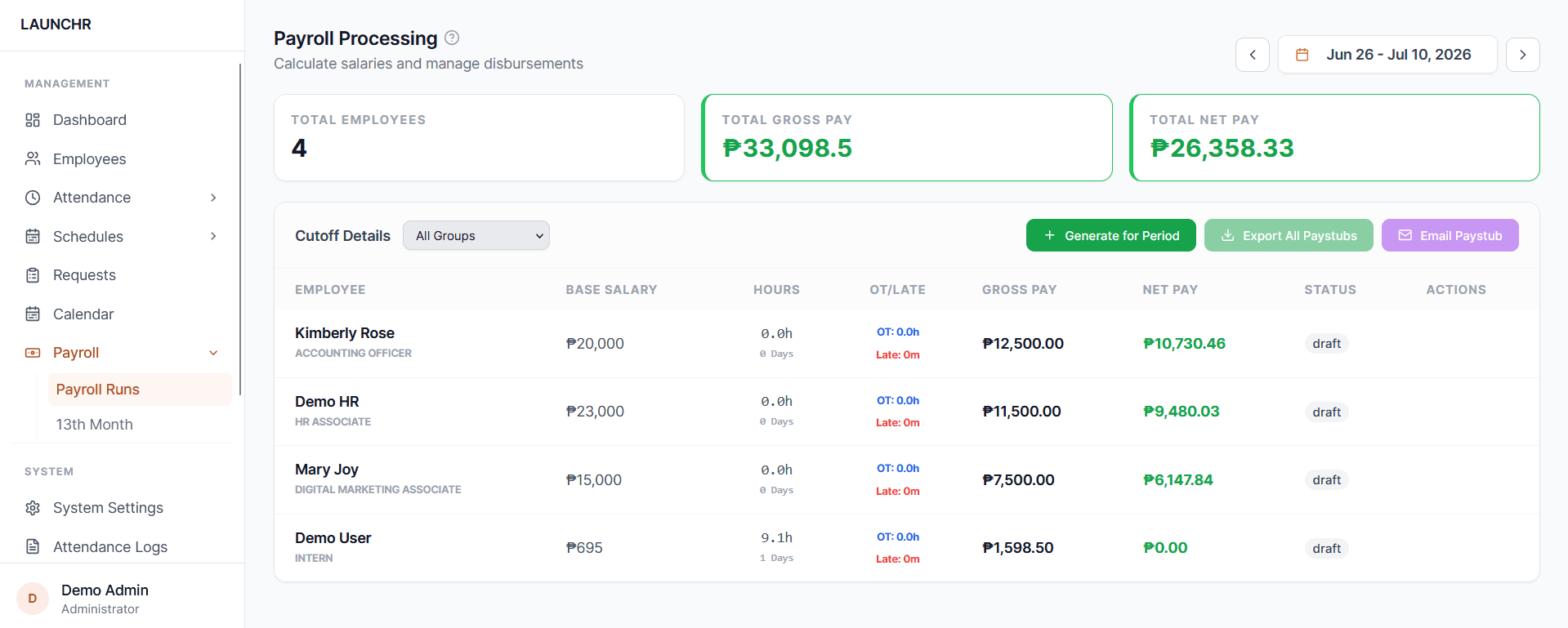
We implement the platforms your operation runs on, integrate them with what you already have, and then staff the team that keeps them healthy — so institutional knowledge stays in the building.
Our Service Line
Fit-gap, configuration, data migration and cutover — followed by the run team that keeps the system healthy.
Sales, service and store systems designed around how your people already work, with an adoption programme attached.
Product engineering for the systems no vendor sells you, in two-week sprints with a demo every sprint.
Assessment, landing zone, migration waves and a committed FinOps baseline — with a bill you can predict.
Our Process
Scope decided on paper, working software every two weeks, and the same team staying on after go-live.

Process walkthroughs, data profiling and a decision log of where you bend and where the platform does.
Target process, integration map, data migration approach and a costed backlog.
Two-week increments with a working demo each sprint and your team in the room.
Dual-run reconciliation, rehearsed cutover and a signed go/no-go checklist.
Ninety days of hypercare, runbooks written, then a standing run team.
Case Study
Consolidated four store systems onto a single ERP ahead of a 180-branch expansion, over a nine-month programme.
Case Studies
Systems Integration engagements — the problem, what we did and what changed.

The Philippine maritime industry stands as a global powerhouse.

In today’s fast-paced supply chain, warehouses serve as the backbone of business operations. Yet many organizations still grapple with mismanaged inventory, order delays, and workflow inefficiencies that result in costly setbacks.

In today’s digital-first economy, the cloud has moved from being a “future-ready” option to a present necessity. Yet, simply lifting and shifting workloads into the cloud is no longer enough.
Often, yes. We have taken over stalled programmes and we have also run the integration layer while another firm owned the core build.
Fixed price per phase after discovery. Discovery itself is a small fixed fee so nobody is guessing at the big number.
It happens, and it is usually the right call. Phases are contracted individually for exactly this reason.
That is the model. The people who built it staff the run service, which is why our second-year support costs less than most first-year ones.