
Springboard at Secure Your Growth 2026: Insights from the Cyber Frontier and the Role of Resilience in the Digital Age
Feb 5, 2026 · Springboard Philippines · 5 min read
In an increasingly connected world, cyber threats have evolved from isolated disruptions into systemic risks. Today, these risks can impact entire organizations, industries, and even economies. Because of this shift, cybersecurity is no longer just an IT concern. Instead, it has become a strategic priority for business leaders, government agencies, and institutions of all sizes.
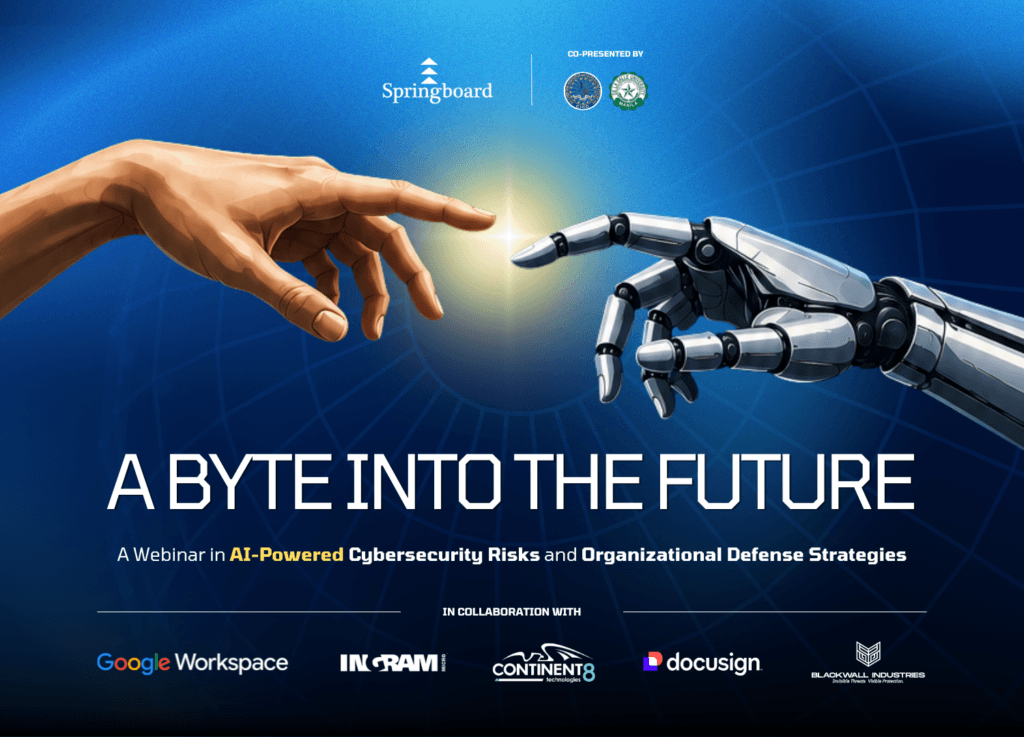
This reality formed the central theme of Secure Your Growth 2026, a webinar held last 27 January 2026. The event brought together senior leaders in cybersecurity, digital transformation, and policy advocacy to discuss the future of the digital ecosystem in the Philippines.
Organized by Blackwall Industries and supported by stakeholders across government and industry, the webinar aimed to assess the country’s cyber readiness amid rapid digital adoption. As threats grow in scale and sophistication, speakers consistently emphasized resilience, adaptive governance, and human-centric security as foundations for sustainable digital growth.
Industry Leaders Shaping the Cybersecurity Conversation
The webinar featured respected voices from across the cybersecurity ecosystem, each offering a distinct perspective on resilience and readiness:
Dr. Donald Patrick Lim, Chairman and President of the Cyber Security Council of the Philippines and President & COO of DITO CMG Ventures, provided a strategic overview of cybersecurity’s role in national growth.
Michael Budow, CEO of Blackwall Industries, shared real-world insights on emerging threat patterns and the limits of traditional defense models.
Jojo Nufable, Founding Chairman and President of the Healthcare Cybersec Tech Alliance, highlighted the urgency of protecting critical infrastructure, particularly in essential services.
Rey Quiason, Head of Business Development at Springboard Philippines, connected the discussion to organizational readiness and workforce capability.
Together, the speakers outlined both the macro-level threat landscape and the practical steps organizations must take to respond effectively.
Beyond Buzzwords: Why Cyber Resilience Matters Now
Early in the discussion, speakers emphasized a crucial point: the digital world has fundamentally changed. Connectivity is no longer the end goal. Instead, technologies such as AI, blockchain, and cybersecurity now underpin national competitiveness and business survival.
As digital adoption accelerates across sectors like BPO, fintech, logistics, and e-commerce, the attack surface continues to expand. Consequently, threats now range from state-sponsored attacks to AI-enabled fraud and large-scale cybercrime operations.
Because of this shift, organizations must move beyond prevention alone and focus on resilience and recovery.
Key Themes from the Discussion
Several recurring ideas framed the broader conversation:
Digital transformation as a double-edged sword While it enables innovation and scale, it also introduces new vulnerabilities.
AI as both a defense tool and an attack vector Therefore, governance, literacy, and ethical frameworks are essential.
Blockchain as an enabler of trust and transparency Particularly in identity management, budgeting, and immutable records.
Resilience over perfection Systems must fail safely, recover quickly, and maintain continuity.
These themes set the stage for deeper, more operational discussions during the panel session.
Panel Reflections: Where Strategy Meets Execution
As the webinar transitioned from keynote insights to open dialogue, panelists focused on practical realities. In particular, they explored how strategy translates into daily operations, culture, and decision-making.
Resilience Over Perfect Security
One point of consensus was clear: perfect security does not exist. As a result, organizations should prioritize resilience instead of absolute prevention.
This approach includes:
Designing systems with redundancy
Preparing incident response and disaster recovery plans
Conducting cyber drills and tabletop exercises to test readiness
Importantly, resilience is not purely technical. It is also organizational. Teams, workflows, and leadership structures must adapt to constant disruption.
The Human Element in Cybersecurity
Another major focus was the role of people. Despite advanced tools, human behavior remains one of the most common attack vectors. Social engineering, insider risk, and shadow IT continue to bypass even sophisticated defenses.
For this reason, cybersecurity awareness must extend beyond IT teams. Business leaders, HR, operations, and the broader workforce all play a role in maintaining security.
Public-Private Collaboration as a Force Multiplier
The panel also highlighted the value of collaboration across sectors. However, effective collaboration goes beyond information sharing.
A “whole-of-nation” cybersecurity approach requires:
Coordinated action between government and private entities
Shared threat intelligence
Joint investments in platforms and capabilities
Through collaboration, organizations can raise collective resilience and respond faster to emerging threats.
Compliance Is Not the Same as Security
Finally, panelists addressed the gap between compliance and real security. While audits and frameworks are necessary, they do not guarantee protection.
True resilience comes from:
Embedding security into system design and architecture
Shifting security earlier in development cycles
Maintaining continuous readiness rather than static compliance
Cybersecurity is as much about people as it is about technology. The discussion detailed how human behavior and insider risk remain common vectors for breach and the ability of social engineering and shadow IT to defeat even sophisticated defenses
The panelists stressed that cybersecurity literacy must extend beyond IT teams into business leadership, operations, HR, and general workforce communities.
Key Takeaways for Organizations
The discussion concluded with several clear imperatives for leaders:
Cybersecurity is a leadership issue Boards and executives must treat cyber risk as a core governance concern.
Resilience must be operationalized Planning, testing, recovery, and education should be part of daily operations.
Innovation requires governance Ethical AI, privacy, and blockchain governance can become strategic advantages.
Partnerships accelerate readiness Public-private collaboration strengthens national and organizational defense.
Building Resilience for the Digital Age
The digital age demands more than perimeter defense. It requires resilience, adaptability, and shared responsibility. Through conversations like Secure Your Growth 2026, Springboard and its partners continue to support organizations as they navigate an increasingly complex cyber landscape.
📩 Reach out today: inquiry@springboardph.com 🌐 Visit us: https://blog.springboard.com.ph 📞 Let’s make resilience part of your business identity.